Cable diagnostics

A health check for your network
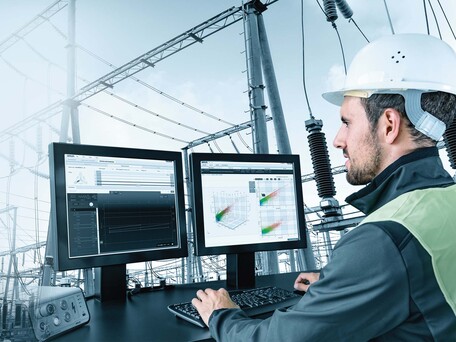
Underground cable systems are the backbone of modern power supply. But how healthy are they really? Traditional cable testing only provides a "pass" or "fail" result. Cable diagnostics, on the other hand, delves deeper: It allows assumptions to be made about how long a cable can still be operated economically, where weak points lie, and what measures are appropriate. This helps to avoid unplanned outages, plan investments in a targeted manner, and significantly reduce costs.

Longer service life, lower costs


Many cables that would be replaced purely on the basis of their age are actually in much better condition. Diagnostic measurements confirm this and enable a realistic assessment of the remaining life time. Repairs can be planned and thus implemented in a more targeted and cost-effective manner, while intact cables continue to operate reliably. New cable routes or repaired sections also benefit, as diagnostics check the installation and quality, thus preventing faults from creeping in.


Modern VLF cable diagnostics can be efficiently integrated into existing work processes. Online partial discharge measurements provide an initial assessment within a few minutes – without the need for decommissioning. Detailed offline diagnostics are only performed if abnormalities are detected. In addition, parallel measuring techniques reduce the time required. And unlike testing, pure and simple, the cable is subjected to minimally invasive stress or damage when it is examined in a non-destructive yet meaningful way.


More than just technology


The combination of measurement methods is crucial. While partial discharge measurement reveals existing defects, dissipation factor measurement indicates the overall condition of the cable insulation and possible moisture influences. Only the combined interpretation provides a complete picture – comparable to a medical check-up, where pulse and blood pressure alone are not sufficient, but a comprehensive blood test is crucial.

However, cable diagnostics is more than just technology. It requires experience and individually tailored assessment logic. There are no fixed limit values, which is why the BAUR Diagnostics Centre of Excellence supports network operators with consulting, training, and strategy development. Standardised procedures create comparable results and, over time, develop into a kind of "patient file" for each cable. Repeated measurements and trend analyses build up a wealth of experience that makes the assessment more reliable from year to year.


Software as the key


Software also plays an important role. The statex® solution is based on over 120,000 stored diagnostic measurements and reliably calculates the remaining life time. The software combines statistics and practical experience, provides recommendations for the ideal time for diagnostics, and enables condition-based planning. This means that good cables are checked less frequently, while critical ones are checked more often. This increases efficiency, prevents failures, and significantly reduces costs.


Conclusion


Those who invest in cable diagnostics are investing in the security of network supply, cost-effectiveness, planning certainty, and future viability. Thanks to modern measuring devices, practical training, and intelligent analysis software, even newcomers can immediately benefit from clear action plans (and save considerable sums of money), while asset management gains a robust basis for decision-making.

You may also be interested in:

Cable testing and diagnostics | BAUR GmbH

Overview: Cable testing and diagnostics

Diagnostics Centre of Excellence | BAUR GmbH

Diagnostics Centre of Excellence

Measurement methods | BAUR GmbH

Measurement methods

home of diagnostics | BAUR GmbH

home of diagnostics